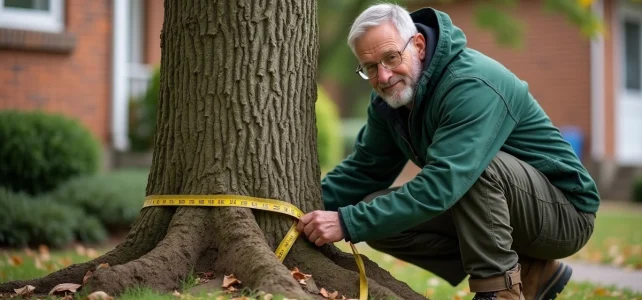
Planting a tree too close to your house exposes you to damage to the foundations, plumbing, and roofing. The Civil Code sets minimum distances from the boundary of a neighboring property, but it does not specify the distance between a tree and your own home. This legal gap leaves the owner alone in facing a technical and insurance risk that is often underestimated.
Home insurance clause and tree too close to the building
Most homeowners believe that their home insurance will cover cracks or plumbing damaged by roots. The reality has become more nuanced in recent years.
Several French insurers now include clauses regarding planting near the building in their general conditions. MAIF, in its 2024 edition “Principal Residence,” includes a clause on the manifest aggravation of risk. Specifically, if a claim is related to roots while the tree was planted at a distance deemed manifestly insufficient considering its adult size, the insurer may reduce or deny compensation.
France Assureurs, in a report titled “Natural Risks and Existing Buildings” published in 2023, addresses the issue from a prevention standpoint. A homeowner who plants an oak or a poplar a few meters from their facade takes a risk that their contract may not necessarily cover.
Before choosing a location, checking the general conditions of your multi-risk home insurance contract can prevent a refusal of coverage. To better assess the situation of a tree close to a house on Jardino, several technical criteria should be cross-referenced with the nature of the soil and the chosen species.
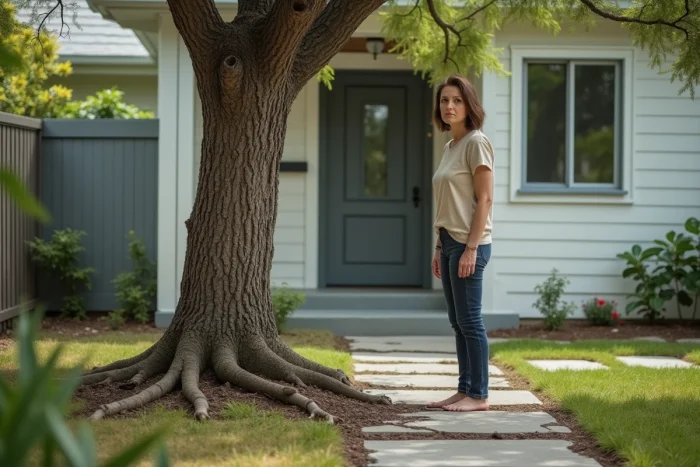
Legal planting distance at property boundary: what the Civil Code says
Articles 671 and 672 of the Civil Code establish two simple rules concerning the boundary with the neighboring land, not the distance from your house:
- Tree over 2 meters tall at maturity: planted at least 2 meters from the property line.
- Tree or shrub 2 meters or less at maturity: planted at least 0.50 meters from the boundary.
- A local urban planning regulation or a recognized practice in the municipality can modify these distances, either increasing or decreasing them.
These distances protect the neighbor, not your house. A tree perfectly compliant with the Civil Code can be only 2 meters from your facade if your land is narrow. The law does not prevent you from doing so, but the technical consequences are your responsibility.
Local rules and PLU
Some municipalities impose greater distances through their local urban planning plan. Others protect existing trees by classifying them as wooded areas. Before any planting, consulting your town’s urban planning department allows you to know the constraints applicable to your plot.
Concrete risks of roots on foundations and plumbing
The damage caused by a tree too close is not limited to branches rubbing against the roof. The main problem is underground.
In clay soil, the roots of a large tree absorb significant amounts of water, causing soil shrinkage. This shrink-swell phenomenon of clays generates differential movements under the foundations and can lead to structural cracks.
The Bordeaux Court of Appeal confirmed in February 2022 the liability of a homeowner whose oak, planted a few meters from their house, had aggravated cracks on clay soil. The homeowner had been warned by an expert report and did not cut down the tree.
Roots can also penetrate drainage pipes or drains, causing blockages and costly infiltrations to repair. Species with aggressive root systems, such as poplar, willow, or silver maple, are particularly problematic near a building.
Species with strong root development
Field reports vary on this point depending on the nature of the soil, but certain species consistently appear in documented claims:
- Poplar and willow, whose roots seek water over very long distances.
- Oak, which develops a powerful and deep root system.
- Silver maple, whose shallow roots lift slabs and sidewalks.
- Black locust, whose suckers can appear several meters from the trunk.
In contrast, small-growing trees like the Indian lilac or serviceberry pose little risk a few meters from a facade.
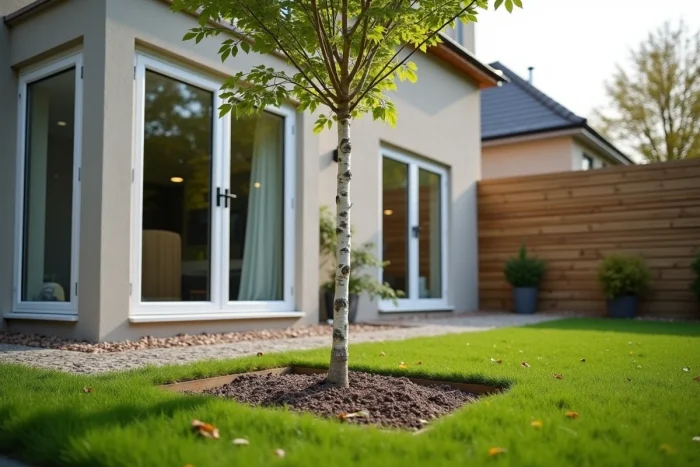
What is the recommended distance between a tree and your house
No law sets a minimum distance between a tree and your own home. Recommended distances are based on feedback from nurserymen, excavators, and building experts.
For small trees (adult height under 6 meters), a minimum setback of 3 meters from the walls is generally considered sufficient. For medium-sized trees, this distance increases to about 5 meters. For large trees with strong root development, a minimum of 8 meters is recommended, or even more on clay soil.
These benchmarks are not legal standards. They result from observations on the most frequent claims. On sloped land, naturally drained and composed of sand or silt, the risks decrease. On clay soil during dry periods, even 8 meters may prove insufficient for an adult poplar.
Owner’s liability in case of damage
French courts increasingly adopt the argument of lack of maintenance and inappropriate planting for the context. Even without violating legal distances regarding the neighbor, a homeowner may be held responsible for foundation repair work if an expert establishes that the tree has aggravated the issues. The 2022 decision of the Bordeaux Court of Appeal illustrates this trend.
The choice of a planting location has long-term implications. A tree that seems harmless at planting can, in a few years, develop a root system that reaches the foundations.
An excavator showed a homeowner that the root of a tree planted 3 meters from the wall had already progressed well beyond in just four years. Anticipating the adult size of the tree remains the best prevention, even before consulting the Civil Code or your insurance contract.