
An electrical network was never designed to dance with the unexpected. Yet, wind turbines and solar panels, increasingly numerous, are making their presence felt and imposing their own rhythms. This new influx disrupts the way electricity and needs meet, forcing a rethink of every link in the chain.
We now see industrial batteries emerging that can compete, in capacity, with small thermal power plants. In the face of variability and the need to adapt quickly, these storage systems are becoming essential: they provide reassurance, stabilize, fill in the gaps, and prevent overflow. Battery storage thus establishes itself as the discreet yet decisive ally of our energy supply.
Battery storage: a pillar to support the energy transition
Energy storage through batteries holds a prominent place in the transformation of the French electrical landscape. With the rise of solar and wind energy, balancing the grid requires new agility. Batteries, organized into battery energy storage systems (BESS), take over: they absorb peaks, release energy when demand surges, and ensure more consistent electricity production.
The operation of battery storage relies on three essential actions: charging, storing, and then discharging. This process, detailed on the page “Energy Storage: How Does a Battery Work? – Useful in Daily Life,” directly addresses the intermittency of renewable energies. Without this capacity to absorb and release, the grid would falter every time the wind drops or clouds gather.
Here’s how an industrial-scale BESS battery proves useful:
- Frequency support: it maintains the instantaneous balance between what is produced and what is consumed.
- Production optimization: it allows the use of excess produced during low-demand periods.
- Supply security: it provides valuable support during consumption peaks.
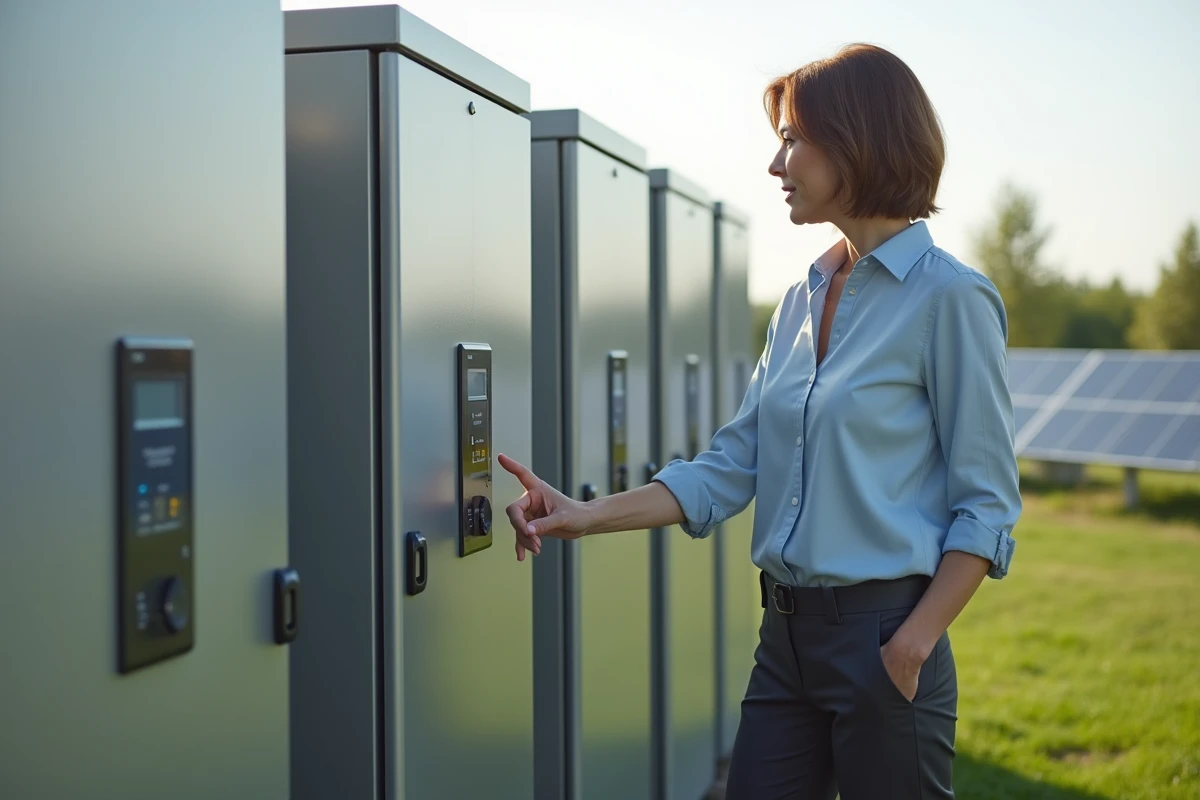
Across the country, France is accelerating the deployment of BESS. Installed near both producers and consumers, these systems enhance grid reliability, reduce dependence on thermal power plants, and facilitate the massive integration of renewable energies. They thus become tools for managing peak electricity demand and securing the entire system.
What battery systems and technologies for what uses?
The world of battery storage is not limited to a single technology. Depending on the need, whether for the grid, businesses, or households, suitable solutions exist. It is the lithium batteries, and particularly lithium-ion, that dominate today: they combine high energy capacity, responsiveness, and longevity. Their compactness and performance make them ideal for electric energy storage in the short or medium term, whether to absorb solar variations or to power autonomous sites.
In large installations, BESS rely on lithium-ion batteries managed by a controller (or BMS, battery management system). This electronic brain ensures safety and optimizes each charge and discharge cycle. The goal: to respond to demand fluctuations and ensure the overall system’s efficiency.
For long-term storage needs, other options are emerging: flow batteries or hybrid systems capable of retaining energy for several hours, or even several days. These choices depend on consumption profiles, budget, and the requirement for a strategic reserve on the grid.
Each storage system is thus calibrated according to its use: residential, tertiary, industrial. Each requires a precise study of the expected lifetime and desired efficiency. Knowing one’s needs and choosing the appropriate technology ensures effective management of electrical energy, without unpleasant surprises.
Environmental impact, economic perspectives, and tips for staying informed
The rise of battery storage in the solar sector raises real questions: the environment, recycling, cost. The life cycle of a solar storage battery begins with mining extraction and should ideally end with effective recycling. The industry is organizing, recycling rates are improving, but waste management still needs refinement. As for the lifetime, it varies depending on the technology, sizing, and how the battery is used.
On the economic side, the cost of storage is evolving rapidly. Prices for lithium batteries are decreasing, opening the door to broader self-consumption: coupling a photovoltaic installation with a battery allows for storing the surplus energy produced and using it when needed. For those who invest, the return on investment is assessed based on the energy capacity installed, the price of electricity, and the availability of public subsidies.
Tips for staying informed and choosing
Before taking action, several points deserve attention:
- Research the origin and recyclability of the batteries offered.
- Consider the lifetime and warranty conditions of the equipment.
- Consult specialized sources to follow developments in photovoltaic installations and the local market.
- Ensure that the proposed storage battery is compatible with your solar installation, particularly for managing surplus energy and its future uses.
The electrical revolution is being written in every installed battery, every managed consumption peak, every kilowatt-hour delivered at the right moment. The question remains how each person will choose to participate, at the crossroads of technology and collective responsibility.