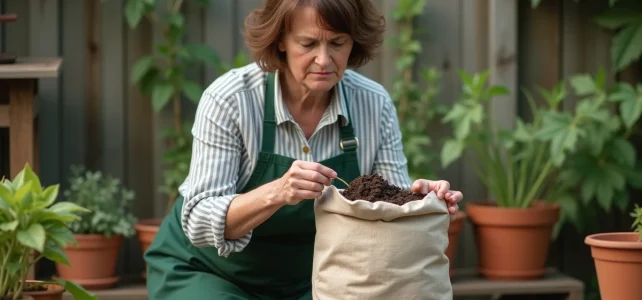
A bag of potting soil found in a corner of the garage after several months always raises the same question: is it still usable? Potting soil is not an inert material. It contains fibers, microorganisms, and sometimes organic fertilizers that evolve over time. Knowing how to recognize expired potting soil prevents compromising your seedlings or repottings, and it’s simpler than it seems.
Pathogenic fungi in potting soil: an invisible risk upon opening the bag
Have you ever opened an old bag of potting soil that seemed fine on the surface, with a still soft texture and a forest-like smell? This is not a guarantee of quality. Contaminations by fungi such as Pythium or Phytophthora can develop in a substrate that has remained moist and closed for several months after opening.
These organisms cause damping off and root rot. The problem is that they do not manifest as visible mold on the surface. Your seeds germinate, then the young shoots collapse within a few days for no apparent reason.
To limit this risk, the first thing to check when you reopen a partially used bag is the internal moisture. If the potting soil is soaked even though you haven’t watered it, the likelihood of fungal contamination increases. A guide detailing how to tell if potting soil is expired helps to systematize these checks before each use.
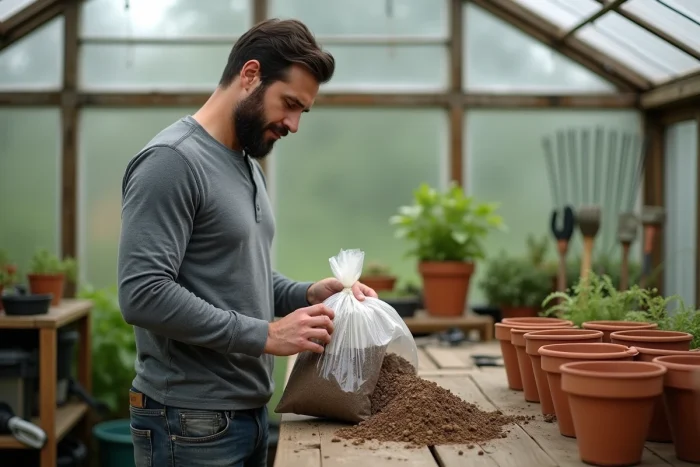
Expired potting soil: concrete signs to observe before planting
Forget the idea of a reliable expiration date on the bag. Manufacturers are starting to indicate a minimum durability date, but it mainly concerns mixtures enriched with organic fertilizers or wetting agents. These additives degrade much faster than the peat or coconut fiber matrix.
The diagnosis relies on three senses: sight, touch, and smell.
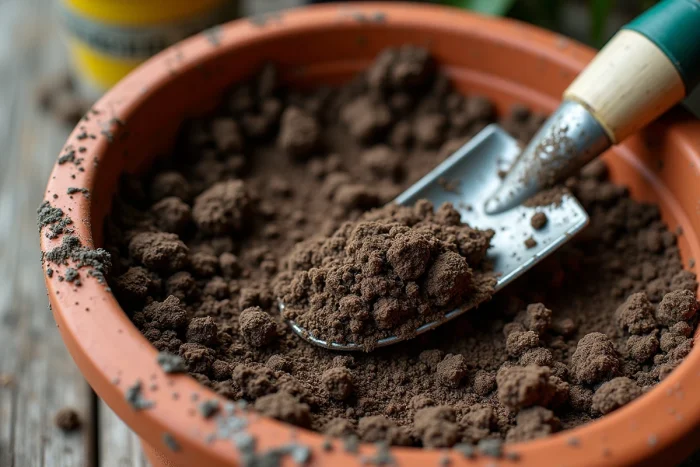
- Compacted and hard texture: potting soil that forms a block difficult to crumble has lost its aeration capacity. Roots will not be able to develop properly, and water will stagnate instead of circulating.
- Smell of sulfur or rotten eggs: this is a sign of anaerobic decomposition. Beneficial microorganisms have been replaced by bacteria that thrive without oxygen. This potting soil should be discarded for any direct use.
- Surface covered with white or green fuzz: superficial molds can be benign, but if accompanied by a strong odor and a slimy texture, the substrate is too degraded for your crops.
- Marked hydrophobia: pour a little water on the potting soil. If it beads and rolls without penetrating, the fibers are too decomposed to retain moisture. Your plants will suffer from water stress even with regular watering.
The test of the control pot
Do you have doubts after the visual examination? Fill a small pot with the suspect potting soil and sow a few seeds of radishes or cress. These species germinate quickly and react rapidly to poor-quality substrate.
If the emergence is irregular or if the seedlings yellow in less than a week, the potting soil is no longer suitable for sowing or young plants. You can still use it as a base amendment in an outdoor bed, mixed with garden soil.
Potting soil shelf life: what accelerates degradation
A sealed bag stored under good conditions maintains an acceptable structure for a good while. However, the water retention capacity and aeration drop significantly after prolonged storage, even in a sealed bag. Internal compaction and fiber degradation are the main culprits.
Several factors accelerate this loss of quality:
- Ambient humidity: an unventilated garden shed concentrates condensation. The potting soil absorbs this water, which restarts the decomposition of organic matter inside the bag.
- Heat: a bag exposed to direct sunlight, even when closed, sees its internal temperature rise. The incorporated organic fertilizers degrade faster and can create imbalances in soluble salts that are toxic to roots.
- A punctured or poorly sealed bag: the entry of air and light encourages colonization by potting soil gnats (sciarids) and opportunistic fungi.
Optimal storage to preserve your substrate
Keep your opened bags in a cool, dry place away from light. Fold the top of the bag over itself and secure it with a sturdy clip. If you transfer the potting soil to a container, choose an opaque container with a lid.
Well-stored potting soil remains usable much longer than a bag forgotten in the sun. The difference really lies in these simple actions.
Recycling old potting soil in the garden: possible uses
Potting soil that is no longer effective for sowing or repotting indoor plants can still be useful in the garden. Mixed in equal parts with mature compost and garden soil, it helps lighten heavy clay soil or mulch the base of your crops.
However, avoid using it pure for potted vegetables or your spring sowings. A depleted substrate will not properly nourish demanding young plants like tomatoes or peppers.
Several municipalities in France are now directing bags of moldy or heavily infested potting soil to industrial composting through recycling centers. If your potting soil smells very bad and shows advanced signs of decomposition, composting remains the best option rather than risking contaminating your plants.
Potting soil does not have a carved-in-stone expiration date, but it has a real lifespan that your senses can easily evaluate. Take thirty seconds to look at, touch, and smell it before each use. These few actions will save you from failed sowings and plants that wither without explanation.