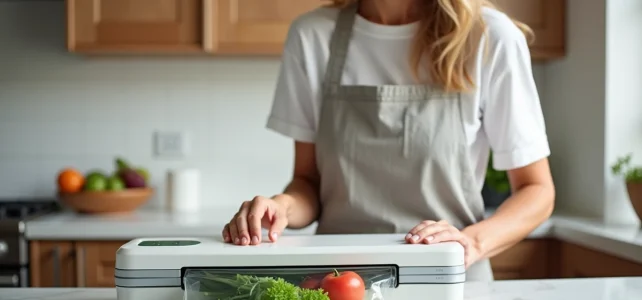
The FoodSaver V2860 remains a benchmark among home vacuum machines, but its three-speed control panel and two food modes still confuse users who stick to the default mode. Properly utilizing each setting changes the quality of the seal, shelf life, and texture preservation.
Dry/Moist setting and suction speed: the important combinations
The Dry/Moist selector controls the sealing time, not the suction power. In the Moist position, the heating strip maintains pressure longer to compensate for residual moisture at the seal. Using Dry on juicy foods (marinated meat, fish, blanched vegetables) produces a weak seal that fails in the freezer.
The three speeds (Gentle, Normal, Fast) control the pump flow. Gentle reduces the suction force to avoid crushing delicate foods like berries or pastries. Fast is suitable for large bags and rigid containers, where the volume of air to be extracted is higher.
We recommend always combining Moist + Gentle for liquid or semi-liquid preparations. This combination prevents both the suction of juices into the mechanism and sealing defects. Before first use, reviewing the FoodSaver V2860 user guide clarifies the exact role of each position on the control panel.
Failed seal on the FoodSaver V2860: technical diagnosis
A seal that fails after a few days almost always indicates a moisture problem at the sealing area, not a defect in the machine. The V2860 heats its sealing strip to a calibrated temperature to melt the plastic of FoodSaver bags. If liquid or condensation reaches this area, the seal remains porous.
Most common causes of a failing seal
- Presence of folds in the bag at the time of sealing: even a small fold creates a channel through which air gradually enters. Pulling the bag flat before closing the lid eliminates this issue.
- Food that is too hot placed directly in the bag: steam condenses on the sealing area. Letting any cooked preparation cool before vacuum sealing is a non-negotiable rule.
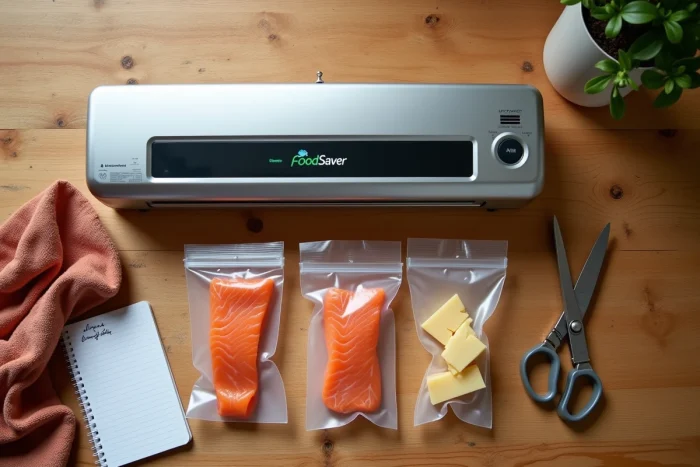
- Sealing strip clogged with food residues: a wipe with a damp cloth after each session is sufficient. Recent FoodSaver models emphasize this regular maintenance more in their manuals.
- Generic bag with thickness or film composition different from FoodSaver bags: the melting temperature is not the same, resulting in incomplete sealing.
If the seal looks correct visually but the bag reinflates after a few days, the problem often comes from a sharp bone or food edge that has pierced the film. Doubling the bag or wrapping the food in food paper before vacuum sealing protects against this type of micro-perforation.
Accessory port and compatibility with FoodSaver containers
The accessory port located on top of the V2860 accepts the standard FoodSaver flexible hose. This port allows vacuum sealing of jars, rigid boxes, and wine stoppers without using a bag. The V2860 remains compatible with FoodSaver boxes and stoppers marketed after 2020, provided that the reference hose FSFSBF0116 or its equivalent is used.
We observe that many users overlook this port and limit themselves to bags. Vacuum sealing in rigid containers is particularly suitable for delicate vegetables, prepared dishes that one wishes to reheat directly in the box, or dry foods (coffee, spices, nuts) whose preservation gains several weeks.
Procedure for rigid containers
Connect the hose to the port, position the tip on the container’s valve, select Normal or Fast depending on the volume, then press the vacuum button. The device stops automatically when the vacuum level reaches the calibrated threshold. Do not use the Gentle setting with containers: the reduced flow prolongs the cycle without benefit, and the pump runs longer than necessary.
Vacuum preservation and cold chain: what marketing doesn’t specify
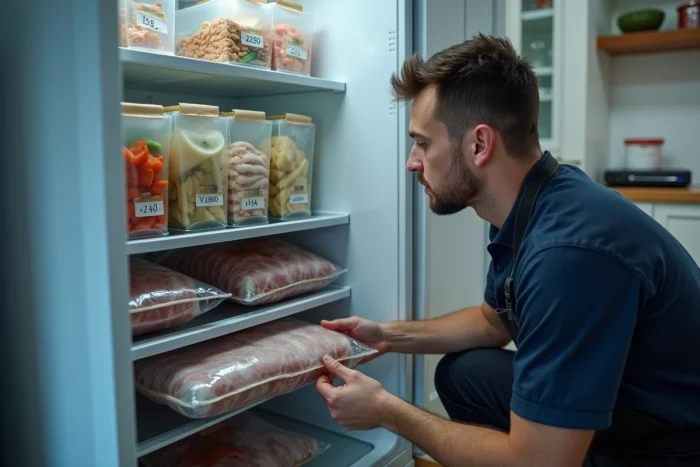
The promise of extended preservation remains accurate, but vacuum sealing does not replace refrigeration or freezing. For raw meat, even vacuum sealed, refrigeration storage times must remain limited and adapted to the type of product. ANSES reminds that refrigerated storage of vacuum-sealed meat products does not halt the development of certain anaerobic bacteria.
In practice, vacuum sealing provides a real benefit for blanched vegetables, cooled cooked dishes, and dry foods. For raw meat and fish, we recommend freezing immediately after vacuum sealing rather than relying on prolonged refrigeration storage.
Foods not to vacuum seal without caution
Soft cheeses continue to ferment and can inflate the bag. Raw mushrooms and unblanched cruciferous vegetables release gases that compromise the vacuum. Blanching vegetables before vacuum sealing stabilizes enzymes and truly extends preservation in the freezer.
The FoodSaver V2860 does exactly what it was designed for, provided its settings and basic food safety rules are followed. The Dry/Moist selector and the three speeds are not gadgets: each combination corresponds to a specific type of food. Ignoring them means using the machine at a fraction of its potential.