The choice of original interior decoration relies less on the accumulation of trendy references and more on the ability to balance materials, light, and proportions. A coherent interior is built from technical constraints, not just aesthetic desires.
Natural light and orientation: the parameter that Pinterest palettes ignore
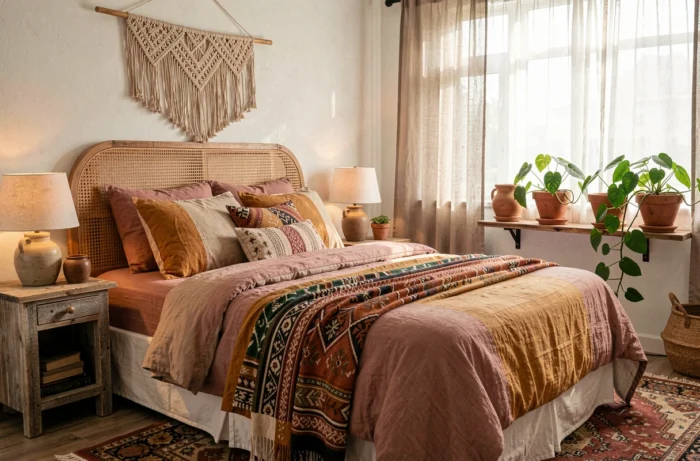
A wall color should not be chosen on a screen. The orientation of the home radically alters the appearance of a shade, and this is the first filter to apply before any selection. A north-facing room receives cold, diffuse light: warm tones (ochre, terracotta, rosy beige) compensate for the lack of warmth without darkening the space.
Conversely, a south-facing exposure bathed in direct light can support more muted or saturated shades. A sage green or a dull blue that appears drab in the store can reveal its depth under generous natural lighting. Testing a paint sample directly on the wall at different times of the day remains the most reliable method.
This principle extends to furniture and textiles. A light linen sofa positioned facing a west-facing bay window will experience accelerated aging from the late-day UV rays. We recommend cross-referencing the orientation with the choice of materials before finalizing a layout.
To find pieces suited to these constraints, visiting the decor on Mulot Bricole allows for comparing ranges of furniture and accessories categorized by style and material.
Composition of upholstery textiles: read the product sheet before the mood board
Textiles occupy a considerable visual area in an interior (curtains, cushions, rugs, throws). Their aesthetic aspect draws attention, but the composition of the fabric determines durability and maintenance in the long term.
- A fabric with a stain-resistant treatment simplifies daily life in a family living room, but its presence must be checked on the product sheet, as touch alone cannot identify it.
- Cotton-polyester blends offer a good compromise between durability and ease of washing, whereas pure linen wrinkles more and requires more attentive care.
- Dense-weight upholstery fabrics resist abrasion better, a criterion to prioritize for seating used daily.
A common mistake is selecting a textile solely for its color or texture in a photo, without consulting its composition or maintenance conditions. A beautiful corduroy on Instagram may prove unsuitable for a home with pets.
Reused furniture: flea markets, resource centers, or refurbished
The reuse of furniture is now part of a structured sector, not just amateur hunting. In France, the REP sector for furniture elements strengthens the goals of repair, reuse, and second life for furniture for the 2024-2029 period. This concretely changes the available options.
Three circuits coexist, each with its advantages and limitations:
- Flea markets and garage sales offer unique pieces at negotiable prices, but without guarantees on structural condition or material provenance.
- Resource centers sort, repair, and resell furniture with minimal information on the condition of the pieces. The quality-price ratio is often excellent for small furniture (chairs, side tables, lighting).
- Refurbished furniture from specialized retailers offers stronger traceability and sometimes a warranty, but at a higher price than traditional flea markets.
Incorporating one or two reused pieces into a contemporary interior creates a visual contrast that standardized new furniture does not produce. A vintage piece brings a patina and uniqueness that cannot be reproduced in series.
Decor styles and material coherence: avoid unintentional patchwork
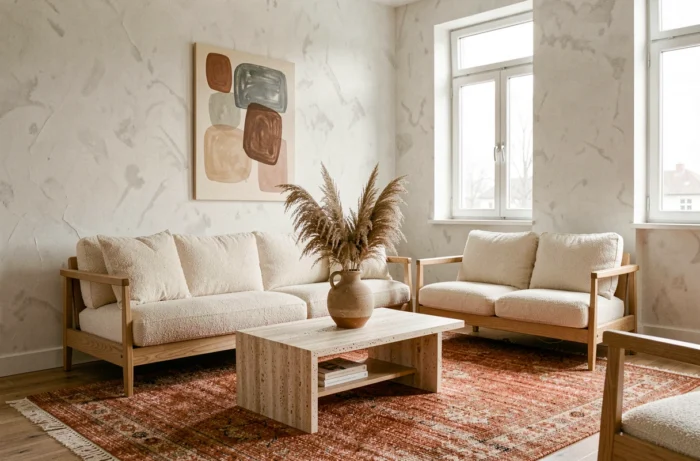
Mixing styles works, provided that a material thread is maintained. An interior that combines raw wood, matte black metal, and polished concrete maintains its coherence through the material palette, even if the shapes vary between vintage and contemporary design pieces.
The most common trap is to accumulate trendy elements from incompatible styles without a link of material or color. A rattan chair, a white marble table, and a Berber rug can coexist if the tones remain within a narrow range (two to three dominant colors, plus an accent).
Limiting the material palette to a maximum of three families per room constitutes an effective composition rule. Beyond that, the eye perceives disorder rather than eclecticism. Wood, for example, can serve as a common thread between spaces with different functions (living room, bedroom, hallway) while varying the species and finishes.
Layout also benefits from respecting the proportions of the room. A large corner sofa in a small space visually crushes the volume, regardless of its style. Favoring modular seating or low furniture in small spaces frees up perspective and gives a sense of spaciousness.
Current color and material trends for interior decoration
Earthy tones (clay, sand, warm brown) continue to dominate the offerings from paint and furniture publishers. This is no coincidence: these colors adapt to most orientations and age well over time, unlike very saturated shades that tire more quickly.
Wood in all its forms remains the pivot material of interior decoration, whether it is flooring (parquet, laminate), storage, or decorative elements. Its association with touches of metal (brushed brass, black steel) or natural stone produces controlled contrasts without overloading the space.
On the furniture side, the trend towards rounded shapes and organic lines continues. Softened angles on tables, mirrors, and lighting provide visual comfort that compensates for the rigid geometry of recent architectures. This is not just a passing trend: these shapes also reduce the risk of collision in narrow circulation spaces, a concrete argument for families.
Original interior decoration does not arise from an accumulation of spectacular pieces. It results from technical decisions about light, materials, and proportions, applied consistently in each room. An interior where each element has been chosen based on its real context, and not just its online appearance, gains personality and durability.