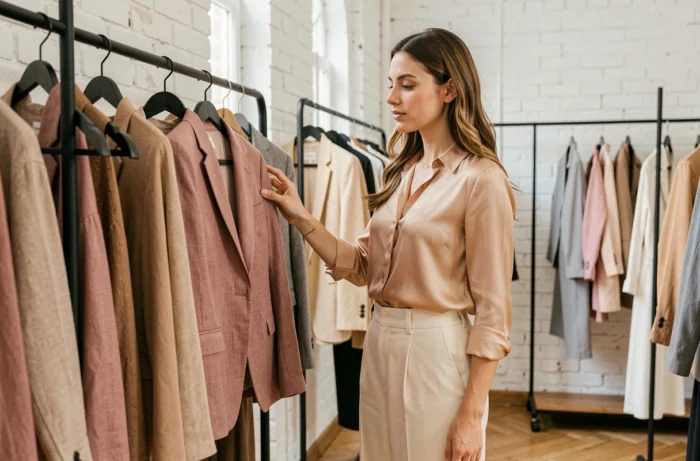
Seasonal women’s fashion is now measured through two distinct lenses: the rapid renewal of collections driven by ultra-fast fashion, and a sustainability logic that is gaining ground through second-hand and European regulation. Understanding how to explore women’s fashion through the seasons requires comparing these two dynamics, their implications on the choice of pieces, and their impact on the composition of a wardrobe.
Digital Textile Passport: What European Regulation Changes for Seasonal Choices
The European regulation on eco-design provides for the gradual introduction of a digital product passport. Textiles are among the priority categories of the European work plan 2025-2030. This system will make data on the composition, traceability, maintenance, reparability, and recyclability of each garment accessible.
For those following seasonal trends, this passport changes the selection criteria. Cut and color are no longer sufficient: longevity and traceability become key selection criteria. A cotton pair of pants with a traceable manufacturing record and high reparability has a concrete advantage over a comparable model without these guarantees.
The gradual ban on the destruction of unsold textiles in Europe reinforces this trend. Brands will have to sell their end-of-season stock differently, which may facilitate access to pieces from previous collections at reduced prices. For those building their wardrobe season by season, this opens an interesting purchasing window for quality clothing, offset by one cycle.
In practical terms, it becomes relevant to explore fashion on Mlle E by integrating these new filters of understanding during each seasonal change, beyond just aesthetic codes.

Seasonal Women’s Fashion: Ultra-Fast Fashion vs. Second-Hand
The seasonal offering is now structured around a documented tension between two models. The table below summarizes their characteristics based on the criteria that matter when renewing a wardrobe.
| Criterion | Ultra-fast fashion | Second-hand / vintage |
|---|---|---|
| Renewal pace | Permanent micro-collections, several dozen per year | Variable stock depending on deposits and platforms |
| Traceability | Often limited or absent | Variable (improved by the future digital passport for recent pieces) |
| Longevity of pieces | Low (few washing cycles before degradation) | Already tested (the piece has survived initial use) |
| Access to color/cut trends | Immediate, mirroring runway shows | Offset by one to several seasons |
| Regulatory impact (textile REP, unsold goods) | Increasing costs passed on to the model | Model favored by regulation |
Second-hand has become a structuring trend, not just a simple economic alternative. Resale platforms and reconditioning by brands themselves are transforming the way trends are explored. A vintage dress or pair of jeans in good condition offers a distinctive style that standardized new collections do not replicate.
What the Sustainability Gap Means in Practice
A second-hand garment has already withstood the test of use. Its performance after washes, the strength of its seams, and the durability of its dye are verifiable. In contrast, a new ultra-fast fashion piece only provides this information after purchase.
For a seasonal wardrobe, this gap translates into a simple trade-off: investing in pieces with proven longevity reduces the need for renewal with each seasonal change.
Colors and Silhouettes: Reading Trends Without Succumbing to the Pace
Color and cut trends remain a driving force behind seasonal renewal. Palettes change, silhouettes oscillate between voluminous and fitted lines. The question is not to ignore them, but to filter what deserves to enter a sustainable wardrobe.
- Neutral colors (beige, off-white, gray) span several seasons without losing relevance, making them reliable bases for a personal style
- Patterned or bold-colored pieces (graphic prints, bright shades) work better as accessories or unique pieces than in total looks, as their trend duration is shorter
- Timeless cuts (straight pants, oversized shirts, midi dresses) absorb seasonal variations without requiring complete replacement
Three to five well-chosen pieces per season are enough to refresh a wardrobe without overhauling it. The rest relies on basics dictated by morphology and personal style, not the collection calendar.
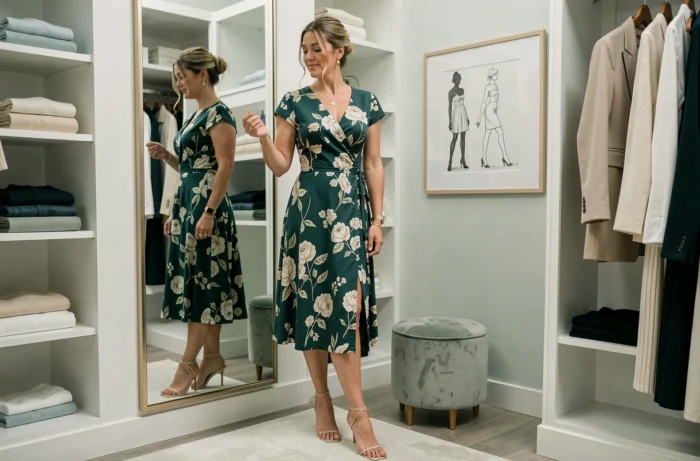
Materials and Seasons: A Technical Filter Often Overlooked
Cotton, linen, and wool remain the reference materials for accompanying seasonal transitions. Their thermal behavior adapts to climatic variations better than most synthetic fibers.
With the future digital passport, the exact composition of a garment will be accessible before purchase. This level of information allows verification that a summer t-shirt is indeed predominantly cotton or that a winter coat contains a sufficient proportion of wool to ensure its thermal function.
Brand Responsibility and Impact on Seasonal Offerings
Extended producer responsibility (EPR textile) and increasing environmental obligations directly modify the available offer. Brands must finance the collection, sorting, and recycling of their products. This additional cost pushes some brands to reduce the volume of their collections or to offer more sustainable ranges.
For those exploring women’s fashion season after season, this evolution has a concrete effect: brands offering repairable and recyclable clothing are gaining visibility. Take-back, in-store repair, or seasonal rental programs are multiplying.
Exploring trends is no longer limited to scanning shop windows or social media. It now includes reading the brand’s commitments, verifying the composition of pieces, and considering the complete life cycle of the garment. The season remains an aesthetic reference, but the choice of a piece relies on criteria that far exceed the color of the moment.